Buildings
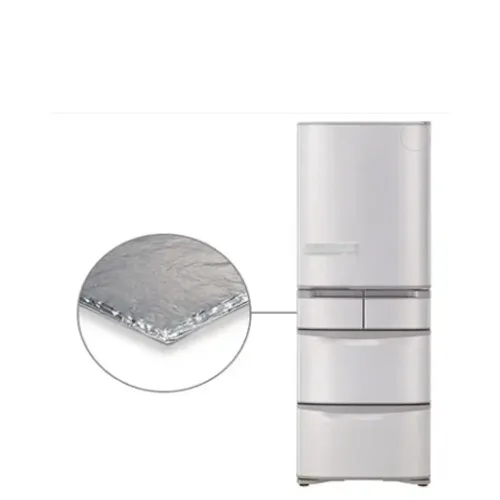
Building buyers usually start with the assembly, not the material. For roofs and attics, reflective foil insulation works by reflecting radiant heat. Qiyao's reflective foil line has 161 products on sale, with starting prices from $0.15. No thermal conductivity value is published for the foil, so the specification should describe the foil as a radiant barrier and verify the facing, perforation, and installation details for the roof assembly.
For walls where thickness is limited, VIP panels are the relevant line. Qiyao lists 333 VIP products, starting from $3.11/pc. The published thermal conductivity is lower than 0.003 W/m·K for the vacuum core. Keep the qualifier "vacuum core" attached: it describes the core under vacuum, not an installed wall with joints, edges, or penetrations.
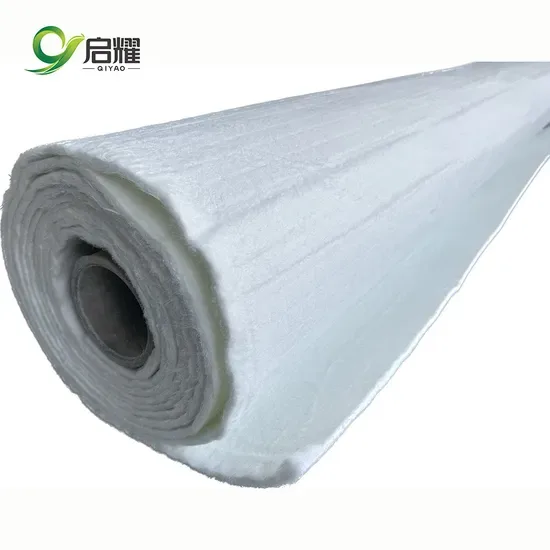
Aerogel felt is listed with 140 products, starting from $12.35/pc. Qiyao's product pages state "low thermal conductivity" but publish no numeric value. For thin build-ups, that means the buyer must request the measured data and sample for the intended thickness and assembly.
The building buyer weighs installed thickness, continuity at joints, and the evidence attached to each material. A radiant barrier claim, a vacuum-core lambda, and an aerogel description without a number are different evidence types. The line counts matter because they show which formats are already listed. They do not replace assembly-level checking. For each material, ask for the data that matches the layer where it will sit, the fastening method, and the adjacent air space. A roof foil, a wall VIP, and a thin aerogel layer are not interchangeable; each carries its own evidence requirement.
Cold chain
Cold chain buyers read boxes, pallet shippers, bags, and ice packs as one system. Qiyao's Made-in-China store lists 291 cold chain thermal boxes/bags, 164 thermal pallet covers/container liners, and 61 ice boxes/PCM lines. The thermal pallet shipper is listed with 140-168 hours holdover at $475. Cold chain boxes start from $15.76/pc.
Those numbers answer different questions. The $15.76/pc box price is a per-piece entry point; the $475 pallet shipper is a higher-unit-cost item with a stated holdover range. A single lambda number does not capture either. The buyer weighs payload volume, coolant mass, pack-out labor, ambient profile, opening frequency, and reuse. A box may be cost-effective for many small shipments; a pallet shipper may be cost-effective for a few large, long-duration shipments.
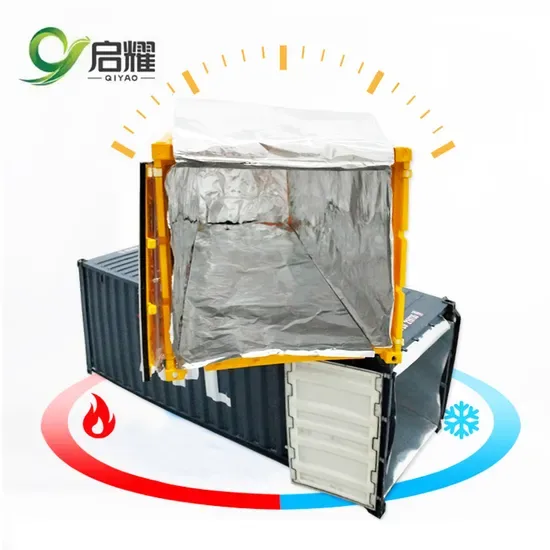
Reflective foil is a separate line of 161 products; where it is used in covers or liners, the published mechanism is reflection of radiant heat. Aerogel felt may appear where thin insulation is needed, but its page states "low thermal conductivity" without a numeric value. The workable approach is to compare the whole system: box or shipper, coolant, liner, and handling.
For a route with frequent door openings, a box may be tested with the actual pack-out. For a long holdover, the pallet shipper's 140-168 hour range is the stated starting point, not a guarantee for every ambient profile. Ask Qiyao for samples and for the dimensions and holdover conditions that match the route. Unit economics and holdover matter more than one number.
Industrial equipment
Industrial equipment buyers often need insulation in spaces that cannot accept thick build-ups. Qiyao's aerogel felt line has 140 products, and its product names include pipeline and battery-cell pad formats. The published description is "low thermal conductivity" with no numeric value, so the buyer should request the measured value for the specific thickness and format.
VIP panels are the relevant line where space is tight and the vacuum core can be protected. Qiyao lists 333 VIP products with a published thermal conductivity lower than 0.003 W/m·K for the vacuum core. That value is qualified; it applies to the core, not to a finished pipe wrap or battery module with edges, fasteners, and compression.
For larger tanks and containers, Qiyao lists 164 thermal pallet covers/container liners and 161 reflective foil products, including IBC tank covers and container liners. Reflective foil works by reflecting radiant heat; no thermal conductivity value is published.
Before specifying, verify thickness options, facing, and whether the format can be cut or shaped for the equipment. Request samples for the intended geometry. Check how the material behaves at joints and penetrations. The aim is not to compare a core lambda to a radiant barrier claim; it is to match the evidence type to the heat-transfer path. For a pipeline, that path may be conductive and convective; for a tank, radiant and convective; for a battery-cell pad, conductive and compressive. Qiyao's OEM/ODM availability and samples allow the buyer to test the format before release.
These three routes lead back to the same comparison matrix. Use it to place the material, the line count, the published evidence, and the from-price side by side. Then request the missing number, the sample, and the written OEM/ODM scope for the application.